
At a glance
Symptoms
- • The refrigerator is running constantly and the compressor rarely cycles off.
- • The exterior sides of the fridge or the center mullion feel unusually hot to the touch.
- • Ice cream in the freezer is soft, or the fresh food section isn't staying below 40°F.
- • Loud humming, buzzing, or rattling noises coming from the bottom or back of the unit.
- • It has been more than 6 months since the last cleaning (or 3 months if you have pets).
- • Visible dust bunnies, pet hair, or lint accumulating at the front toe kick grille.
Common causes
- • Blocked condenser coils prevent the refrigerator from expelling the heat it removes from the interior, suffocating the sealed system.
- • Forces the compressor to run overtime, drastically increasing your monthly electricity bill, especially with California's high tiered energy rates.
- • Leads to premature compressor failure, turning a $15 maintenance task into a $700-$1,200 major repair.
- • Causes the compressor and surrounding components to overheat, frequently burning out the start relay or run capacitor.
- • Reduces overall cooling capacity, leading to spoiled groceries and unsafe food storage temperatures.
Safety First — Read Before You Start
- •Always unplug the refrigerator from the wall outlet before removing any access panels or cleaning near the compressor to eliminate the risk of electric shock.
- •Never use water, wet rags, or liquid chemical cleaners directly on the condenser coils; this is strictly a dry-cleaning task.
- •Exercise extreme caution around the delicate copper tubing and aluminum cooling fins; bending or puncturing them can cause a catastrophic, unrepairable refrigerant leak.
- •Wear a dust mask, as you will be disturbing years of accumulated dust, pet dander, mold spores, and kitchen grease.
- •If pulling the refrigerator away from the wall, move it straight out to avoid tearing your linoleum or scratching hardwood floors.
Tools & supplies you'll need
- Appliance coil cleaning brush (long, flexible, bristled brush - $10-$15 at hardware stores)
- Vacuum cleaner with a narrow crevice tool and soft brush attachment
- Flashlight or headlamp for visibility under the unit
- Phillips and 1/4-inch hex nut drivers (for removing the rear access panel if required)
- Dust mask (highly recommended for allergy sufferers or homes with heavy pet dander)
- Microfiber cloth or damp rag for wiping down the exterior grilles
Step-by-step instructions
Unplug the Refrigerator and Prep the Area
Safety first: always disconnect the power before starting. If your fridge's plug is behind the unit, gently pull the refrigerator straight out from the wall. In tight California galley kitchens, you may need to slowly wiggle it side-to-side. Once unplugged, lay down an old towel or drop cloth in front of or behind the fridge (depending on where your coils are located) to catch the inevitable avalanche of dust bunnies.
Tip: If your fridge is on soft flooring, slip a piece of cardboard or hard plastic under the front wheels before rolling it forward to prevent deep floor gouges.
Locate Your Condenser Coils
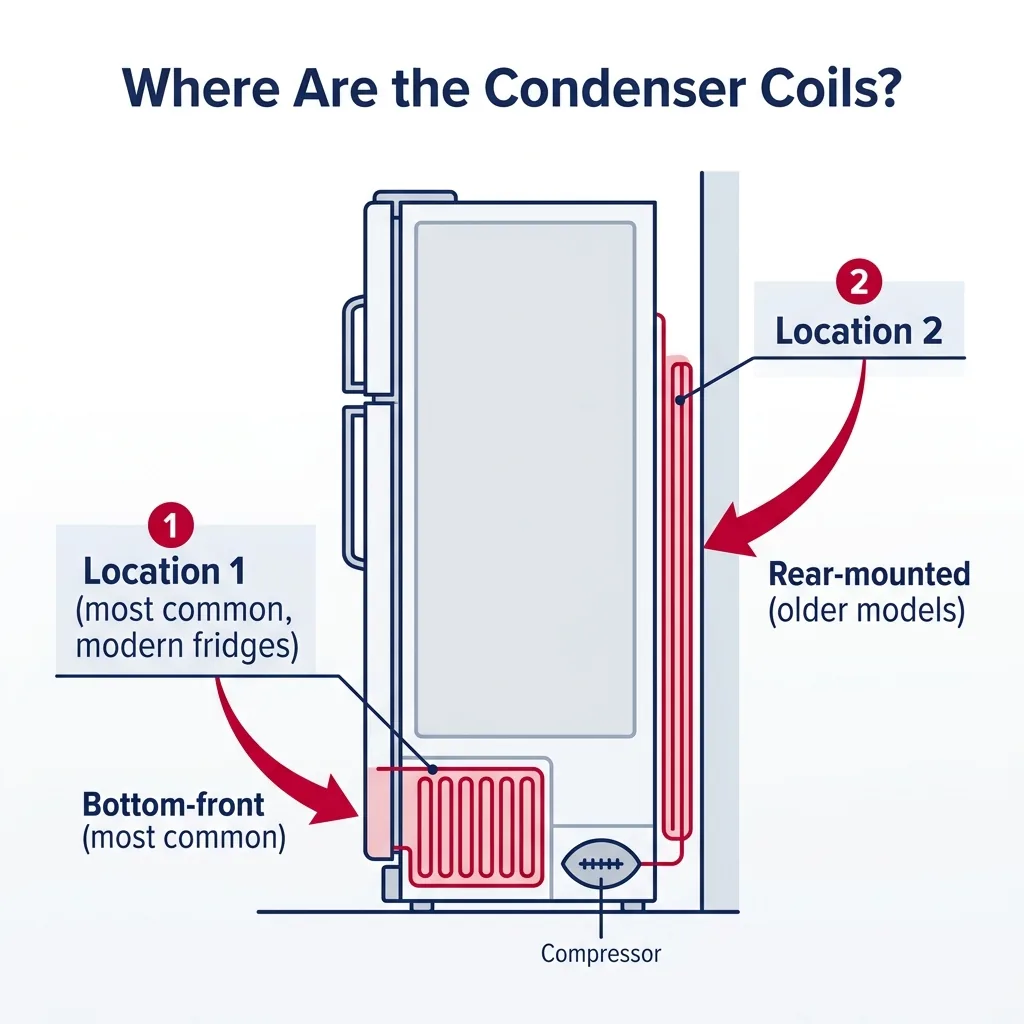
Condenser coils are generally found in one of three places. On older or basic models, they are the large black wire grid mounted on the outside back of the fridge. On most modern standard freestanding units, they are hidden underneath the refrigerator, accessible from the front or back. On high-end built-in models (like Sub-Zero), the coils are usually located at the very top, hidden behind a flip-up louvered grille.
Tip: Consult your owner's manual if you aren't sure. If you see a removable toe-kick grille at the floor level of your fridge, your coils are almost certainly underneath.
Remove the Access Panel or Grille
If your coils are underneath and accessed from the front, simply grab the plastic toe kick grille at the floor level and pull it straight out; it usually snaps off easily. If you need to access them from the rear, use a 1/4-inch hex nut driver or Phillips screwdriver to remove the lower back panel (usually made of thin metal or specialized cardboard). Keep the screws safely in a small bowl.
⚠ Warning: Never leave the rear cardboard/metal panel off permanently. It is not just a cover; it acts as an air baffle that forces the condenser fan to pull air across the coils. Without it, your fridge will overheat.
Brush the Coils Thoroughly
Put on your dust mask. Take your long, flexible appliance coil brush and carefully insert it into the gaps between the condenser coils. Twist the brush and pull it back out to extract the dust and pet hair. Repeat this process across the entire width of the coil assembly. If you live near the coast in areas like San Diego or Ventura, coastal humidity mixed with kitchen grease can make this dust slightly sticky, requiring a bit more twisting action to break it loose.
⚠ Warning: Be gentle. Do not forcefully jam the brush into the coils. The aluminum fins are sharp and easily bent, and the copper tubing containing the refrigerant is fragile.
Vacuum the Debris
As you brush the debris loose, use your vacuum's narrow crevice tool to suck up the dust clouds. It often helps to hold the vacuum nozzle right next to the coils with one hand while you brush with the other. If you are working from the back of the unit, take a moment to carefully vacuum the blades of the condenser fan motor, ensuring you don't bend the plastic fan blades.
Tip: A shop-vac with a strong suction motor works best for this task, as standard household stick vacuums sometimes lack the power to pull heavy debris from the deep recesses of the coil housing.
Clean the Area and Reassemble
Once the coils look clean and you can see the metal surfaces again, vacuum up the remaining debris from the floor and the surrounding machine compartment. Wipe down the plastic toe kick grille or rear panel with a damp microfiber cloth before reinstalling it. Securely fasten any screws. Finally, plug the refrigerator back into the wall outlet and gently roll it back into place.
Tip: Make sure to leave at least 1 to 2 inches of clearance between the back of the refrigerator and the wall to ensure proper airflow.
Brand-specific notes
Some brands have known design quirks worth knowing about before you start.
Sub-Zero
Sub-Zero units feature top-mounted compressors. You'll need to flip up or unscrew the louvered grille at the very top of the unit. The aluminum fins on these condensers are extremely delicate. Often, a soft brush attachment on a vacuum is safer than a stiff coil brush. Always turn the unit off at the control panel before cleaning near the fan.
LG / Samsung
On many modern LG and Samsung French Door refrigerators, the coils are packed tightly into the rear bottom compartment. You MUST pull the fridge out and remove the lower back panel to access them properly. The front toe-kick area usually only provides access to the water filter and leveling legs, not the coils.
Whirlpool / KitchenAid
These brands frequently place the coils underneath the unit in a serpentine pattern. The front toe kick pulls straight off. Because the coils run deep under the floor of the fridge, you will absolutely need a long, flexible 24-inch coil brush to reach the back sections where the worst dust accumulates.
GE / Profile
Certain GE models feature what they call a 'NeverClean' condenser, which is rolled into a tight, black cylinder in the back machine compartment. Spoiler alert: they absolutely do need cleaning. You'll need to remove the back panel and carefully brush the exterior of the cylinder to remove the mat of dust that inevitably forms.
What our techs see most often
Here in Southern California, we see a massive spike in 'fridge not cooling' calls during the first major heatwave in July. Nine times out of ten, the culprit is just a heavy blanket of golden retriever hair and dusty smog buildup suffocating the condenser coils. A $15 coil brush and 20 minutes twice a year will literally save you from an $800 compressor replacement.
When to call a professional
- → You accidentally bend or puncture a copper line while brushing and hear a hissing sound (this is a refrigerant leak—open windows immediately and call a pro).
- → The compressor is clicking on and off every 3 to 5 minutes even after the coils have been thoroughly cleaned (indicates a failed start relay or bad compressor).
- → The condenser fan motor (located next to the coils in the back) is seized, won't spin freely, or makes a loud grinding noise when running.
- → Your refrigerator is a high-end built-in unit and you cannot safely access the top panel without risk of injury or damaging the custom cabinetry.
- → The coils are coated in a thick, sticky layer of heavy kitchen grease that dry brushing and vacuuming cannot remove; a pro may need to use specialized coil cleaner.
Related Refrigerator Troubleshooting
These troubleshooting guides cover problems this task can help solve.
Refrigerator Compressor Won't Stop Running: Causes and Fixes
Refrigerator Door Not Sealing Properly: How to Fix
Refrigerator Ice Maker Not Working: How to Fix It
How to Fix a Refrigerator That's Not Cooling
Refrigerator Making Strange Noises: What They Mean and How to Fix
Frequently asked questions
How often should I clean my refrigerator condenser coils?
The standard recommendation is every 6 months. However, if you have heavily shedding pets (cats or dogs), live in a very dusty area (like hillside homes prone to Santa Ana winds), or have a fridge located in a garage, you should perform this task every 3 to 4 months.
Can I use an air compressor or canned air to blow the coils clean?
While it is incredibly effective at removing dust, blowing high-pressure air indoors will create a massive, unsanitary dust cloud in your kitchen. It is much better to use a brush and vacuum. If your fridge is in a garage and you can roll it out into the driveway, compressed air is an excellent method.
How much does a professional refrigerator coil cleaning cost?
Appliance repair companies typically charge between $125 and $185 for a preventative maintenance visit. This usually includes a thorough coil cleaning, inspecting the door gaskets, checking the defrost system, and verifying temperature calibration.
Why is my fridge still running constantly after I cleaned the coils?
It can take up to 24 hours for a warm refrigerator to fully cool down and return to a normal cycling pattern. If the compressor continues to run non-stop after a full day, you may have a failing condenser fan motor (a $150-$250 repair), a weak compressor, or a sealed system refrigerant leak.
Related Repair Guides
How to Fix a Refrigerator That's Not Cooling
A refrigerator that runs but does not cool is one of the most common appliance problems we see. Most cases come down to dirty condenser coils, a bad evaporator fan, or a defrost-system fault — and several are fixable in under an hour.
Refrigerator Compressor Won't Stop Running: Causes and Fixes
A refrigerator compressor that never cycles off wastes energy, creates excessive noise, and will eventually burn itself out. Learn how to diagnose and fix the most common causes, from suffocating condenser coils to failing door gaskets.
Refrigerator Door Not Sealing Properly: How to Fix
A loose or broken refrigerator seal lets cold air escape, leading to spoiled food and high energy bills. Learn how to diagnose, clean, and replace your door gasket to restore a tight seal.