
At a glance
Symptoms
- • Musty, swampy odor coming from the washer drum
- • Visible black or dark green spotting on the gray rubber door boot
- • Freshly washed clothes smell like mildew or damp towels
- • Slimy, grayish residue accumulating in the bottom fold of the gasket
- • Small water drips from the front door due to debris breaking the glass seal
- • Allergic reactions or skin irritation from mold spores transferring to clothing
Common causes
- • Prolongs the life of the $150-$250 rubber door boot seal by preventing dry rot
- • Prevents harmful mold spores from transferring to your family's clothing and bedding
- • Stops the buildup of hard water minerals (extremely common in LA and OC) that trap organic matter
- • Maintains a watertight seal against the glass door to prevent expensive flooring damage
- • Improves washing machine efficiency by keeping drain ports in the gasket clear of sludge
Safety First — Read Before You Start
- •NEVER mix chlorine bleach with white vinegar, ammonia, or hydrogen peroxide. Doing so creates highly toxic, potentially lethal chloramine or chlorine gas.
- •Always wear heavy-duty rubber gloves and eye protection when scrubbing with bleach to prevent chemical burns and eye damage.
- •Ensure excellent ventilation. Prop open your laundry room door or run the exhaust fan, especially in unventilated California garage setups where fumes can accumulate quickly.
- •Unplug the washer from the wall outlet before performing deep cleaning to prevent accidental starts or electrical hazards while working with liquids.
Tools & supplies you'll need
- Heavy-duty rubber gloves and safety goggles
- Liquid chlorine bleach OR 3% Hydrogen Peroxide (never mix the two)
- Old toothbrush or soft-bristled nylon scrub brush
- Microfiber cloths, paper towels, or old rags you don't mind ruining
- Empty spray bottle
- Mild dish soap (like Dawn)
Step-by-step instructions
Prep the Area and Protect Yourself
Before you begin, unplug the washing machine from the wall to ensure complete safety while working with liquids near the control panel. Put on your safety goggles and heavy-duty rubber gloves. If your washer is located in a tight indoor laundry closet, turn on the exhaust fan and open nearby windows. If your washer is installed in a hot Southern California garage, open the garage door to allow cross-ventilation, as chemical fumes can become overwhelming in trapped heat.
Tip: Wear old clothes. Bleach splatters happen easily when scrubbing rubber, and you don't want to ruin your favorite shirt.
Perform an Initial Debris Wipe-Down
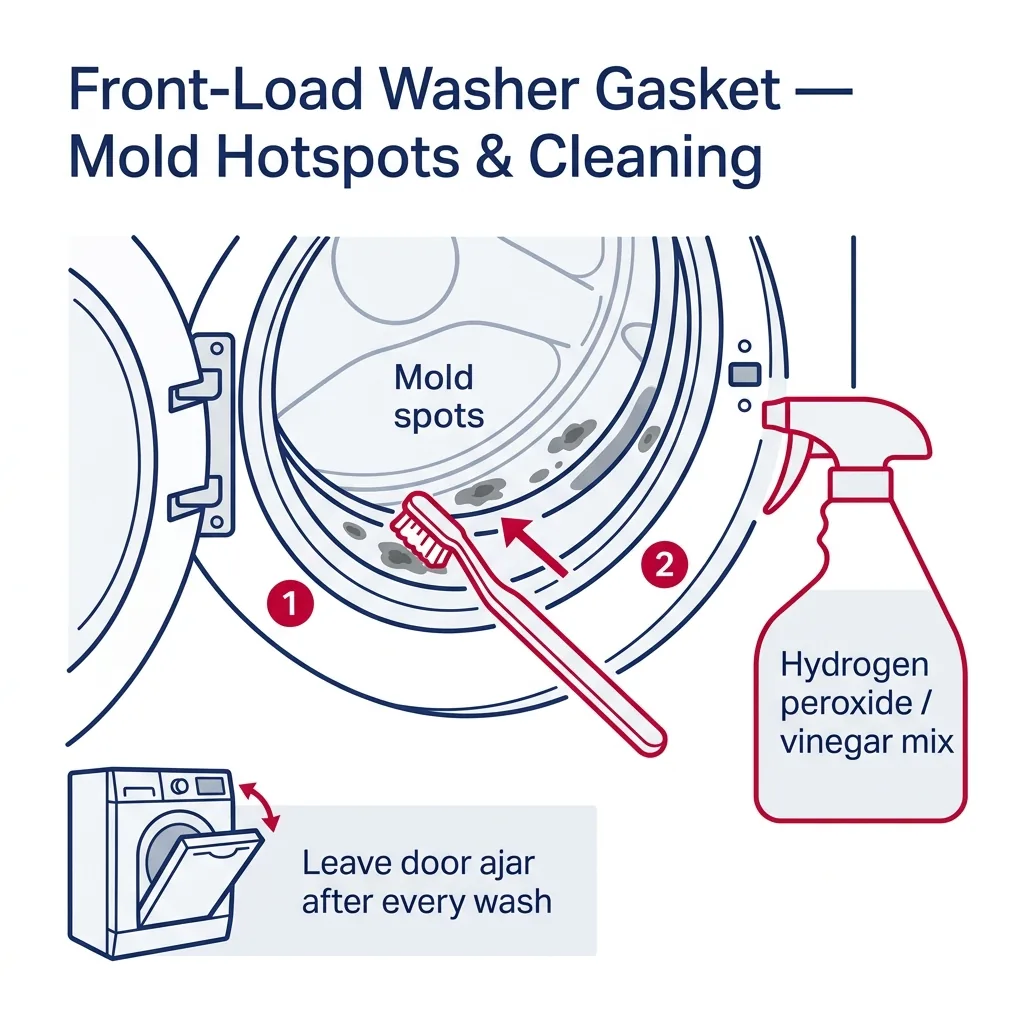
Open the washer door and gently pull back the folds of the gray rubber gasket (also known as the door boot seal). Using a dry paper towel or an old rag, wipe out the bottom 6 o'clock position of the gasket. You will likely find a gross mixture of hair, lint, coins, paperclips, and slimy sludge. Removing this physical debris first prevents you from just pushing mud around once you introduce your cleaning chemicals. Be gentle—do not yank the rubber so hard that you dislodge the retaining spring that holds the gasket to the frame.
⚠ Warning: Watch out for sharp objects like screws, nails, or bobby pins hiding in the folds, which can cut your fingers or puncture the rubber.
Apply the Mold-Killing Solution (The Rag Packing Method)
Because mold grows on the vertical sides and upper portions of the circular gasket, simply spraying a cleaner won't work—it will just drip down to the bottom. Instead, use the 'rag packing' method. Choose your weapon: either a 50/50 mix of bleach and water, OR straight 3% hydrogen peroxide (never both). Soak several old rags or heavy-duty paper towels in your chosen solution. Take these saturated rags and pack them tightly into the fold of the gasket all the way around the door opening. This ensures the chemical stays in direct contact with the black mold spots.
Tip: Hydrogen peroxide is a fantastic, less-toxic alternative to bleach that actually destroys the cellular structure of mold rather than just bleaching it clear.
Let the Solution Soak
Leave the soaked rags packed inside the gasket for at least 30 to 60 minutes. Mold roots grow deep into the porous rubber of the door boot. If you wipe it away immediately, you are only removing the surface bloom, and the mold will return within a week. The extended dwell time allows the bleach or peroxide to penetrate the rubber and kill the spores completely. Use this downtime to wipe down the exterior of the washer or clean the detergent dispenser drawer.
⚠ Warning: Do not leave pure bleach soaking on the rubber overnight. Extended exposure to highly concentrated bleach can degrade the rubber, making it brittle and prone to cracking.
Scrub the Stubborn Spots
After the soaking period, remove the rags and dispose of them (or wash them separately). Take an old toothbrush or a soft-bristled nylon scrub brush and aggressively scrub any remaining black spots. Pay special attention to the small weep holes (drain holes) usually located at the bottom center of the gasket. In areas with hard water, like Los Angeles and Orange County, calcium scale can build up around these holes and trap mold. If you see white crusty scale, you can carefully scrub it, but remember not to use vinegar if you just used bleach.
Tip: For incredibly tight crevices, a cotton swab (Q-tip) dipped in your cleaning solution works wonders to clear out the tiny drain ports.
Rinse and Run a Tub Clean Cycle
Once the gasket is scrubbed clean, use a clean cloth dampened with plain water to thoroughly wipe down the entire rubber boot, removing all residual bleach or peroxide and loosened grime. Next, plug the washer back in. To flush the system completely, run the washer on its 'Tub Clean' cycle, or the hottest water setting available (Sanitize or Allergen cycle), on an empty drum. You can add a commercial washing machine cleaner tablet (like Affresh) directly into the drum for this cycle.
⚠ Warning: Do not add laundry to this rinse cycle, as leftover bleach in the gasket could ruin your clothes.
Implement a Prevention Routine
Cleaning the mold is only half the battle; preventing it is the rest. Mold requires three things to thrive: darkness, warmth, and moisture. To eliminate the moisture, get into the habit of leaving the washer door slightly ajar after every wash day. Keep a dedicated microfiber towel on top of the machine, and take 10 seconds to quickly wipe the moisture out of the bottom gasket fold after your last load. Finally, drastically reduce or eliminate the use of liquid fabric softener, as it coats the inside of the machine with an animal-fat residue that mold loves to feed on.
Brand-specific notes
Some brands have known design quirks worth knowing about before you start.
LG
LG front loaders often have a small drain hole at the 6 o'clock position in the gasket. If this gets clogged with lint and hard water scale, water pools and creates a mold factory. Make sure to clear this hole with a toothpick or cotton swab during your deep clean.
Samsung
Many Samsung models feature 'Self Clean+' technology, which spins the drum at high speeds to clean the tub, but this doesn't scrub the physical gasket. You still need to manually wipe the rubber boot fold, especially on the VRT series where the deep folds can easily hide baby socks and sludge.
Whirlpool
On Whirlpool Duet and newer front-load series, the bellows (gasket) has a very deep, wide lip. While their Fan-Fresh options help circulate air, manually wiping the moisture out of the bottom lip after your last load of the day is still absolutely crucial to prevent black mold.
GE
GE's newer UltraFresh models actually feature Microban-treated blue gaskets and an active venting system to dry the drum. However, if you use excess liquid fabric softener, it can still coat the Microban surface with a sticky film, allowing mold to grow on top of the residue.
Bosch
Bosch compact washers, incredibly popular in tight LA condos and apartments, have very rigid gaskets. Be gentle when pulling back the folds to clean, as aggressive yanking can tear the stiff rubber or unseat the high-tension retaining spring ring.
What our techs see most often
Out here in coastal spots like Santa Monica and Ventura, the ambient ocean humidity combined with a closed washer door is a recipe for instant mold. We get dozens of calls a month for 'leaking doors' that turn out to be nothing more than a gasket so packed with mildew and pet hair that the glass can't seal properly.
When to call a professional
- → The mold has eaten deep into the rubber, causing it to become brittle, cracked, or physically degraded.
- → Water is actively leaking from the bottom of the washer door onto the floor even after a thorough cleaning.
- → The rubber gasket has detached from the front metal panel or the inner plastic drum lip.
- → The mold simply won't come off, and you want to replace the door boot seal entirely (a difficult job requiring front panel removal and stretching a high-tension spring clamp).
- → You smell a burning or electrical odor coming from the machine, completely unrelated to the musty mold smell.
Related Washer Troubleshooting
These troubleshooting guides cover problems this task can help solve.
How to Decode Washing Machine Error Codes (LG, Samsung, Whirlpool, GE)
Washing Machine Shaking and Vibrating: Causes and Fixes
Washing Machine Leaking from Bottom: Find and Fix the Source
Washing Machine Not Spinning: How to Fix It
Washing Machine Smells Bad: How to Eliminate Mold and Mildew
Frequently asked questions
How much does it cost to replace a moldy washer gasket if cleaning fails?
A professional gasket replacement typically costs between $250 and $400. The OEM rubber part itself usually runs $80 to $150, but it is a labor-intensive job. A technician often has to remove the top panel, control board, and entire front panel of the washer to access and properly tension the inner and outer spring clamps.
Can I use bleach and vinegar together for extra cleaning power?
Absolutely NOT. Mixing chlorine bleach and white vinegar creates toxic chlorine gas, which can cause severe respiratory damage or even be fatal. Always use one or the other. If you want to switch methods, thoroughly rinse the gasket with plain water and run a rinse cycle before applying a different chemical.
Why does my washer smell like a swamp even after I run a tub clean cycle?
Tub clean cycles are great for descaling the stainless steel drum and the outer plastic tub, but the water level usually doesn't reach high enough to vigorously scrub the deep front folds of the rubber gasket. You must manually wipe and clean the door boot to eliminate the odor source completely.
Will fabric softener make the mold problem worse?
Yes. Commercial liquid fabric softeners are often made with a base of animal fats or heavy silicones. They leave a sticky, waterproof residue inside the washer drum, hoses, and gasket. Mold and mildew feed aggressively on this organic residue. We recommend switching to 1/4 cup of plain white vinegar in the softener dispenser as a natural, residue-free alternative.
Is it safe to leave the washer door open if I have pets or toddlers?
Safety must come first. If you have curious cats, small dogs, or toddlers, leaving a front-load washer door wide open is an entrapment hazard. Instead of leaving it wide open, purchase a magnetic washer door prop (available online for about $15 to $20). These devices keep the door securely ajar by just an inch or two—enough to allow airflow and prevent mold, but too narrow for a child or pet to climb inside.
Related Repair Guides
Washing Machine Smells Bad: How to Eliminate Mold and Mildew
A musty, swampy smell coming from your washing machine usually means mold, mildew, or a buildup of detergent biofilm. This guide walks you through deep-cleaning the gasket, clearing the drain pump filter, and flushing the tub to eliminate odors for good.
Washing Machine Leaking from Bottom: Find and Fix the Source
A puddle under your washing machine is a quick way to ruin your flooring. We'll show you how to track down the source of a bottom leak—from faulty drain pumps to worn tub seals—and fix it before water damage sets in.
How to Clean a Washing Machine Drain Pump Filter
Cleaning your front-load washer's drain pump filter is one of the easiest and most effective maintenance tasks you can do. Grab some towels and a shallow dish, and let's clear out those trapped coins, lint, and bobby pins to get your washer draining perfectly again.